Flame Cutting Services

Flame cutting is the industry standard for processing heavy-duty steel. When plates exceed the thickness limits of laser and plasma cutting, oxy-fuel provides the power necessary to tackle demanding industrial projects.

Fractory’s oxy-fuel cutting services will ensure your growing needs never outpace your production capabilities. Our Project Engineers are ready to assist in planning and execution, making certain your projects are completed cost-efficiently and up to high standards.

Capabilities

Maximum material thickness
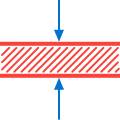
Carbon steel ≤150 mm
Cutting area
Cutting area Up to 12000 x 3000 mm

Get your flame cutting quote now

Get quote
Trusted by 62,000+ engineers

Why Order Gas Cutting From Fractory?

  • Scale your production without switching suppliers, we can handle single orders upwards of 2 million pounds.
  • Discuss your oxy-fuel cutting project with Fractory’s engineers for cost-efficient solutions.
  • Fractory handles everything from quoting to delivery, including quality control.
  • A single point of contact simplifies project management, freeing up time for value-added activities.
  • We orchestrate your entire production path, seamlessly connecting initial cutting with finishing and final assembly.
  • Quick quotes and lead times.

Our Manufacturing

Fractory uses CNC machines that have flame cutting torches. Using gas cutting technology, we can cut steel plates with a thickness of 10…150 mm. All oxy-fuel cutting is carried out following quality classification EN ISO 9013.

Although it is generally advised to turn to plasma cutting when facing thick materials, flame cutting service is essential for thicknesses over 100 mm and is quite often preferred for materials that are about 50mm thick already. It is important to note though, that oxy-fuel cutting involves the oxidisation process. Therefore, it limits the possibilities of the method to ferrous metals only.

What Is Flame Cutting?

Oxy acetylene cutting is known by many names, such as oxy cutting, oxy-fuel cutting, gas cutting or flame cutting. It is a thermal process that uses a combination of fuel gases and pure oxygen to cut metal.

Flame cutting relies on pre-heating. First, the flame is used to heat up a localised spot on the metal. Then a high-pressure stream of pure oxygen is directed towards this area. This oxygen stream triggers a rapid chemical reaction, effectively “burning” through the material.

With cutting temperatures reaching up to 3500°C, the torch is designed with a specialised nozzle: outer ports deliver the pre-heating gases, while a central jet delivers the high-pressure oxygen that performs the final cut.

Flame cutting is excellent for cutting carbon steel due to the specific chemical reactions involved. As the metal reacts with the oxygen, it forms iron oxide, which has a lower melting point than the steel itself, allowing for a clean, continuous cut.

Therefore, it is a good option when working with ferrous metals, but is pretty much unusable with aluminium or even stainless steel. Aluminium oxide has a higher melting temperature than the base metal, creating a “skin” that prevents a clean cut. Stainless steel, on the other hand, is designed specifically to resist oxidation, lacking the reactive properties necessary for flame cutting to be effective.

For thick plates made from materials other than carbon steel, alternative methods like waterjet cutting are recommended to achieve high-quality results.

Advantages of Oxy-Acetylene Cutting

  • Cuts thick materials – This is by far the biggest advantage of using a flame cutting service. It enables the cutting of steel plates up to a thickness of 150 mm.
  • Portability – It does not require primary power, nor compressed air. Therefore, it is easily portable. The 15 kg set lets you cut metal pretty much anywhere, making it a solution for on-site welding and cutting jobs.
  • Cutting speed – One of the advantages of the oxy acetylene cutting service is its quickness. It’s especially evident for steel plates with a thickness of over 30 mm. Although plasma cutting is also considered a speedy option, oxy cutting edges it with bigger thicknesses and the gap widens further with the increase of dimensions.
  • Variety of operations – Oxy-fuel torches are not suitable only for a cutting process. Some of the other executable operations include welding of ferrous metals, heat treating, heat shaping, riser cutting and brazing.

Online Gas Cutting

While our CNC machining, bending and laser cutting quotes are automated on the platform, flame cutting jobs still need manual reviewing.

If you are looking to get some thick metal parts manufactured, send us a request for quote or upload your CAD files to the platform and our engineers will contact you in 48 hours.

Our Multi-Stage Connected Manufacturing Approach

  • Upload & configure

    Upload & configure

    Simply upload your CAD files, choose your materials and processes, and receive a comprehensive quote for your entire project.

  • Multi-Stage Manufacturing

    Multi-Stage Manufacturing

    Our MSCM platform orchestrates a bespoke production path through our network of manufacturing partners, balancing speed, cost, and quality to meet your project's unique demands.

    • Intelligent planning
      Intelligent planning

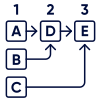
      The core of MSCM. Our platform creates a complete production blueprint, mapping the original sequence of processes and identifying specialist partners.

    • Specialist production
      Specialist production

      Core manufacturing processes are routed to the ideal manufacturing partner. On completion, parts undergo rigorous quality checks before moving to the next stage.

    • Partner coordination
      Partner coordination

      Our platform manages all partner logistics and communication, orchestrating the production flow and adapting to real-world situations to eliminate delays.

    • Finishing
      Finishing

      We coordinate all secondary processes, from heat treatments to surface finishes, applying targeted quality checks to ensure they meet your exact requirements.

    • Assembly & kitting
      Assembly & kitting

      We manage the final assembly process. Parts are configured to your required level, from kitted components and sub-assemblies to complete units, ready for final validation.

  • Quality checked & delivered

    Quality checked & delivered

    Your completed parts are checked against your specifications to ensure quality before being packaged for on-time delivery.

Oxyfuel Cutting FAQ

What fuel gases do you use?

We primarily use acetylene but other gases like propylene and propane are also available.

What role does oxygen play in the cutting process?

Oxygen and fuel gas are combined in order to provide the necessary elements for heating the metal.

The cutting head has several holes where the gases flow out. First, a combination of oxygen and fuel gas comes out of the surrounding holes to preheat the metal.

Then, an oxygen jet is directed onto the workpiece via a central oxygen valve. The metal oxidises and the pressurised jet blows away the slag.

How big is the heat affected zone?

The heat affected zone depends on the fuel gas and cutting speed. Still, compared to other thermal cutting methods, the area is larger.

What is the quality?

The angular deviation of the cut is actually smaller when comparing it to plasma cutting for example. At the same time, the edge is rougher and may need post-treatment, depending on the quality requirements.

What are the material requirements?

Oxy fuel cutting is only available for ferrous metals. Low-carbon steels make up the bulk of the work but wrought iron is also suitable.

Do you deliver to my address?

Yes, Fractory offers UK-wide delivery for all orders.

We deliver your parts straight to your selected address. Fractory takes care of transportation and delivers your parts straight to your selected address, so you can focus on the engineering side of things.

Let us ease your workload! Order metal fabrication from Fractory and experience the benefits yourself: 1-1 engineering support, payment terms for companies, a single point of contact, competitive pricing, on-time deliveries and quality control.
Get a Quote